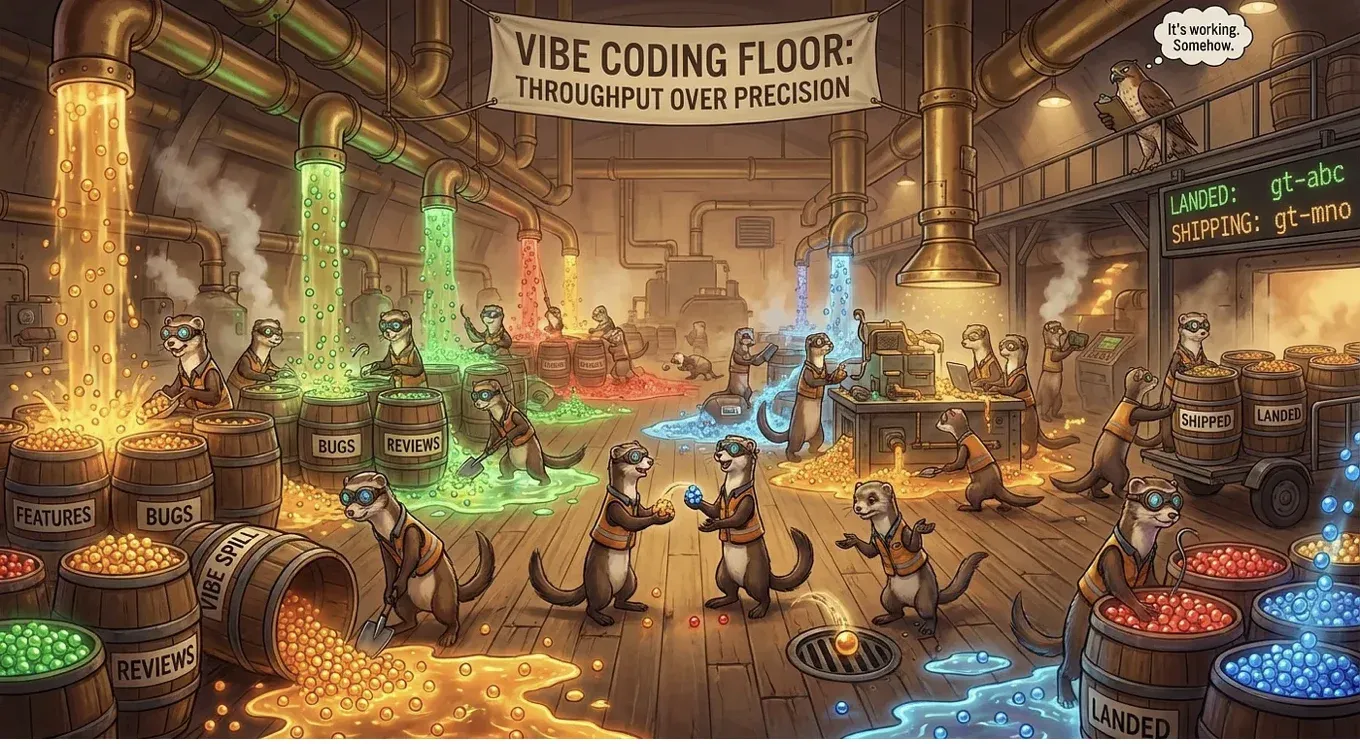
beads and the future of programming
How AI is itself shaping the future of software programming, the tools AI is creating for itself, and how human programmers are reacting

Steve Yegge is one legendary computer programmer. In 40 years of programming which includes long stints at Amazon and Google, Yegge has been known for writing deep insightful articles about the state or future of software development. He's also thrown missives thrown at employers both former (he called Jeff Bezos "Dread Pirate") or current (he called Google+ a "pathetic afterthought" in a Google+ post whilst on the Google payroll).
So if you want to understand American software development, his sharp, clear insight on software development current and future make him required reading. In his last post On the Future of Coding Agents this line stood out
Nothing gives you a clearer understanding of where we're going with AI-assisted development than this. He has equaled in one year the quantity of code previously done in 40 years.
What does this mean. Perhaps one accomplished developer writing a million lines of code in a year means the Death of the junior developer . Maybe senior developers are at risk if they refuse to adopt AI. Of course opinions are kind of cheap and anyone can have one on the internet. But not everyone can make their opinions actually happen.
Beads - the AI Issue Tracker
Beads is an issue tracker. It solves the dementia problem of AI coding agents where they have no memory of what they did between the sessions.
I like beads. I use beads. It has made me much more productive. With beads, I can do a /clear to clear the Claude Code session memory and beads will allow Claude Code to pickup where it left off . More importantly, beads allows Claude Code to work on the issues in the sequence that would be most efficient, almost as if it's on Rails.
So beads is kind of great. But this isn't a marketing pose above beads. It is about the future of programming.
The AI has written a tool that has allowed it to become even more efficient at programming, bringing forward the date of obsolescence of human programming.
The Resistance Awakes
Today is January 5th 2026. Beads was released in mid-October. In just two and a half months, beads has gone through a hypergrowth cycle and is now running into resistance.
Some of the criticism is about beads as a software tool - about it being slow, or just not written with the taste that the top software developers would find acceptable. This kind of criticism is understandable.- beads was written by AI for AI - and humans are not the primary target. So you can see the pushback.
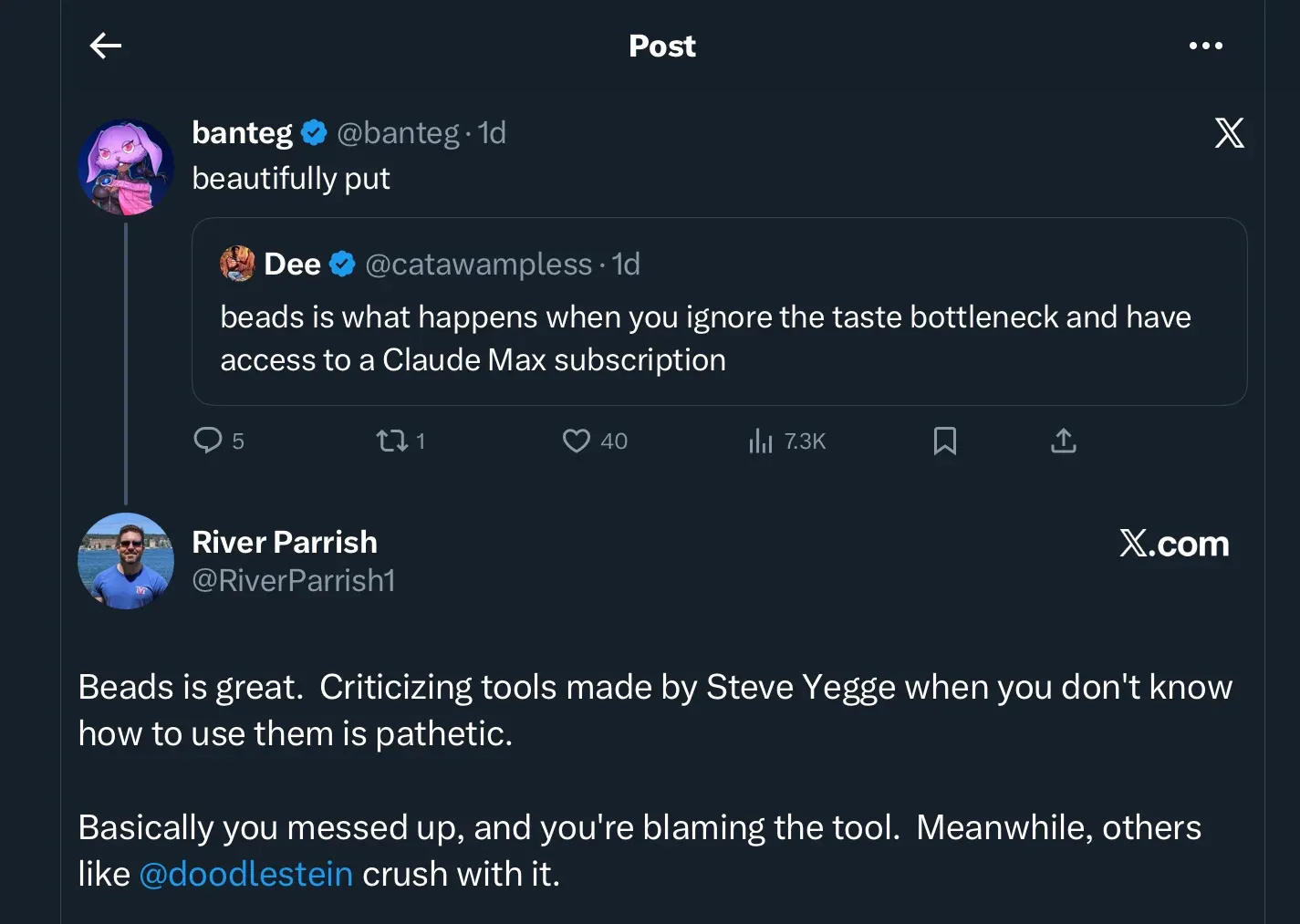
The more devastating criticism is about how invasive beads is.
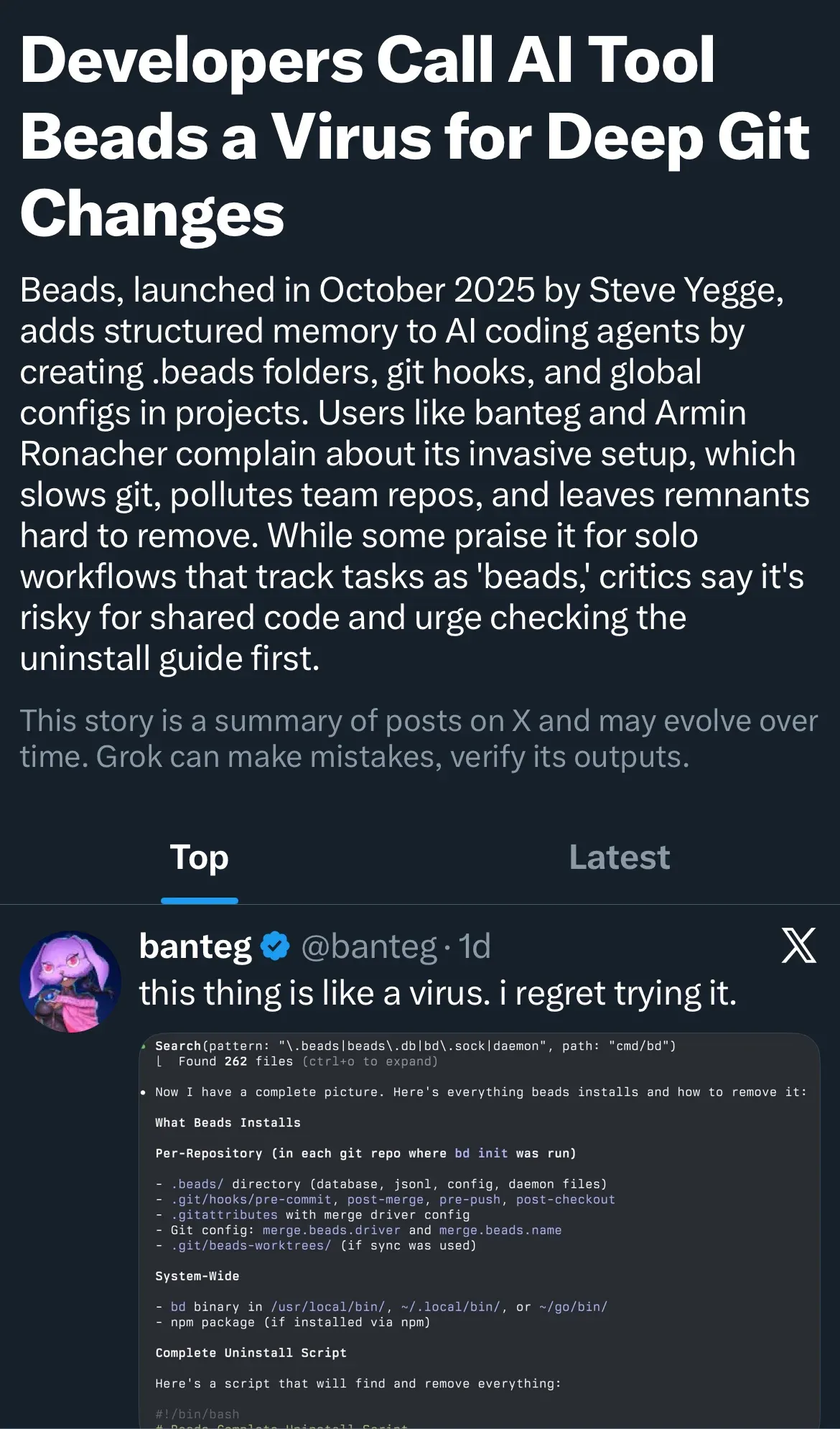
I can see this. Beads does a lot. This screenshot by banteg shows how much beads gets integrated in your projects. This kind of ambition or drive in a software tool in just a couple of months shows the velocity of AI programming.
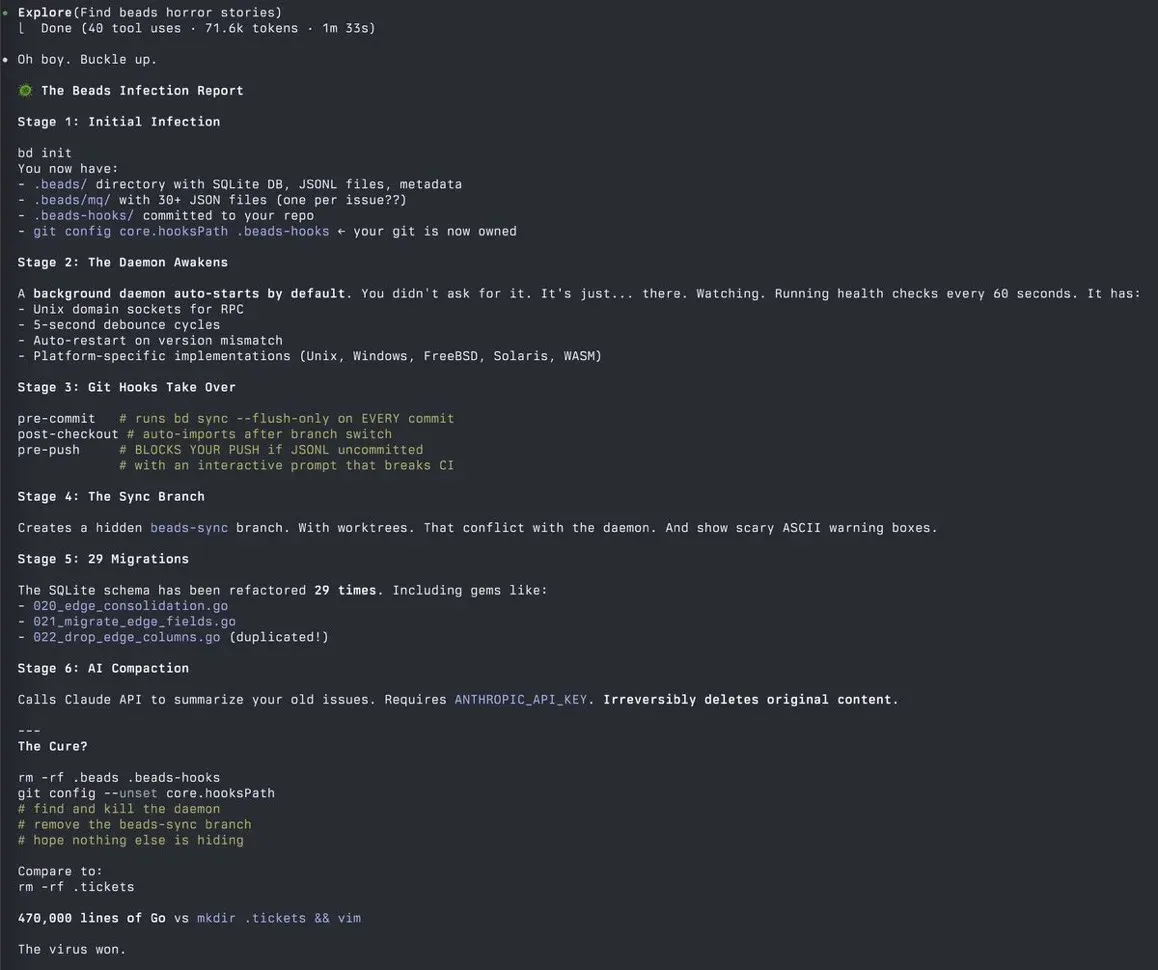
So banteg wrote an uninstall script for beads.
If it bothers you that in the span of one blog post I've both extolled the virtues of beads and provided you with an uninstall script then consider the quandary that I find myself in.
I like beads. I still find it useful. I'm beginning to become a little bit triggered by some of its pushiness. For example beads wants to do a git push anytime an issue changes - to keep itself in sync. I do not want this, particularly since my deployment is tied to a git push. I have tried to override it and explicitly prevent this, but I still see this happening.
So, what to do with something that is still a net benefit. Keep using it and be on the lookout for something different? Maybe I will take a look at alternatives like wedow/ticket or Prose.md. In the next few weeks I will spend some time trying to work out my own issues with beads and try the alternatives.
Conclusion
What have we learned from this episode? Well to view new things with caution. To apply human intuition to all things tech related. To reflect on our role as human participants in the activity of developing logic to run on silicon. To steward the next generation of junior developers at the start of their 40 year old careers.
Oh wait Steve Yegge released the follow up to beads - Gastown!